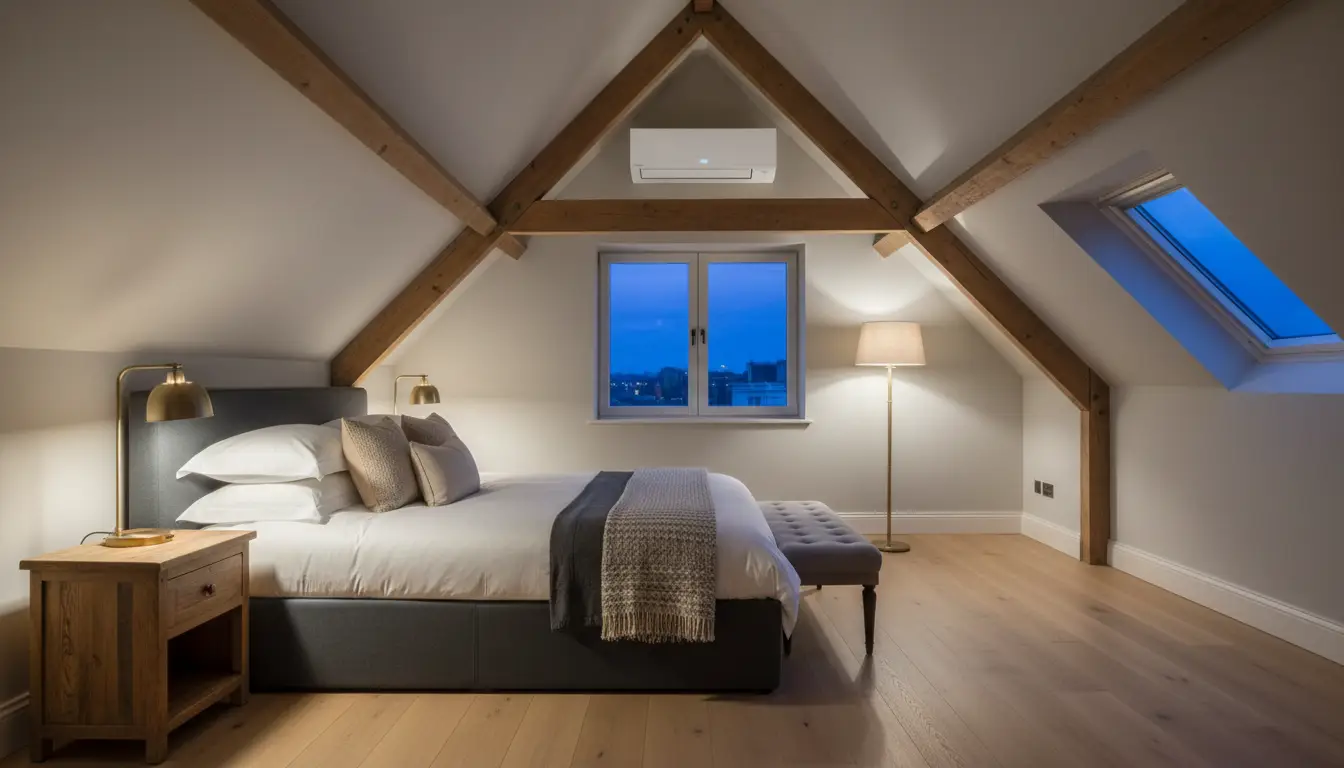
Loft & Extension Air Conditioning
The rooms that need it most
Heat rises into lofts and pours into glazed extensions. We make the warmest rooms in the house usable all year.
Lofts sit directly under the sun and glazed extensions invite it in. On a warm afternoon they can run five to ten degrees hotter than the rest of the house, and stay that way into the night.
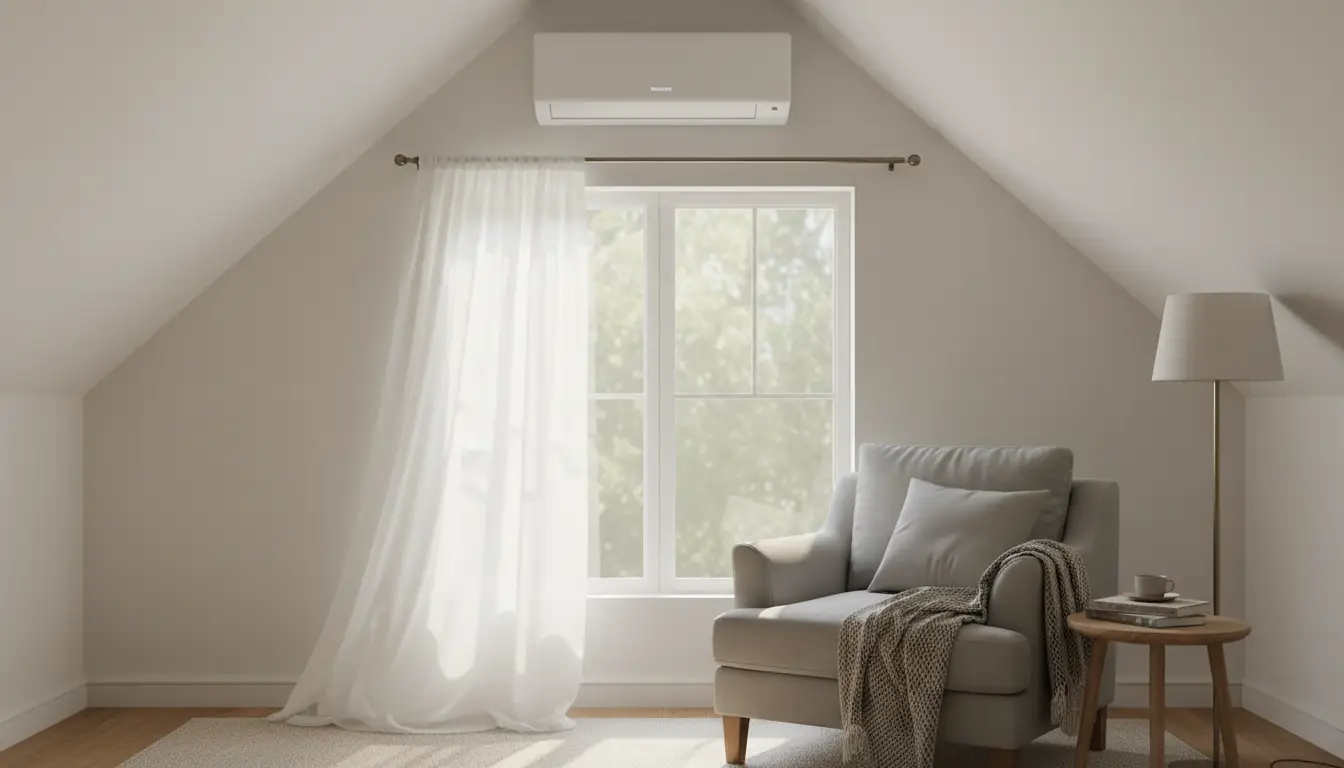
We specify compact, quiet systems for sloped ceilings, gable walls and wide glazing, plan condensate and pipe routes with the conversion rather than after it, and position outdoor units discreetly on upper elevations or at ground level.
Designed for the hottest rooms
What makes a loft or extension system right
- 01Loads calculated for solar gain, glazing and roof construction
- 02Compact units sized for sloped ceilings and gable walls
- 03Concealed ducted options for design-led extensions
- 04Condensate and pipe routes planned with the conversion
- 05Outdoor units positioned carefully on upper elevations
- 06Efficient heating for the same rooms in winter
Day and night
Usable in July, warm in January
A loft or extension system earns its keep at both ends of the year: quiet cooling through the warm months, efficient heat-pump warmth in winter.
The result is simple: the best rooms in the house stop being seasonal.
In the room
Lofts and extensions, considered
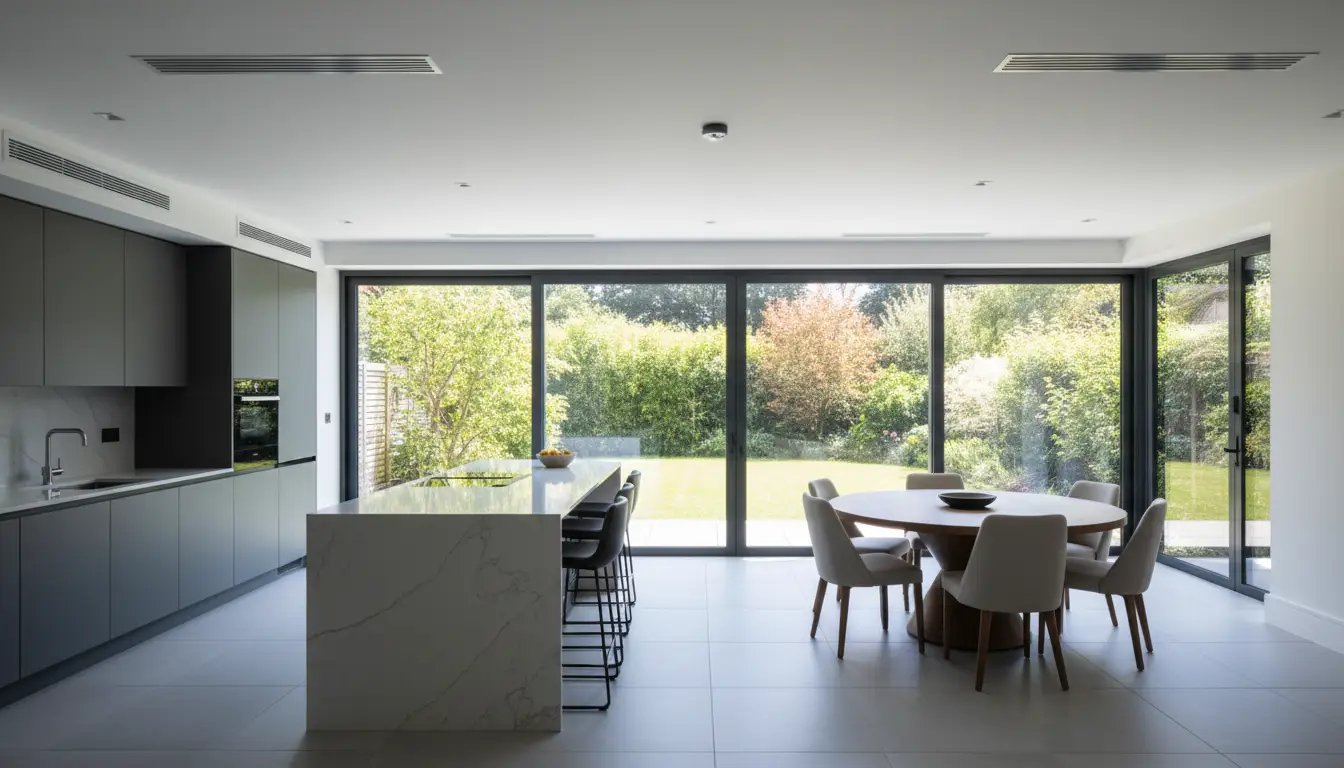
Glazed extensions — solar gain calculated properly, cooled without a single visible unit.
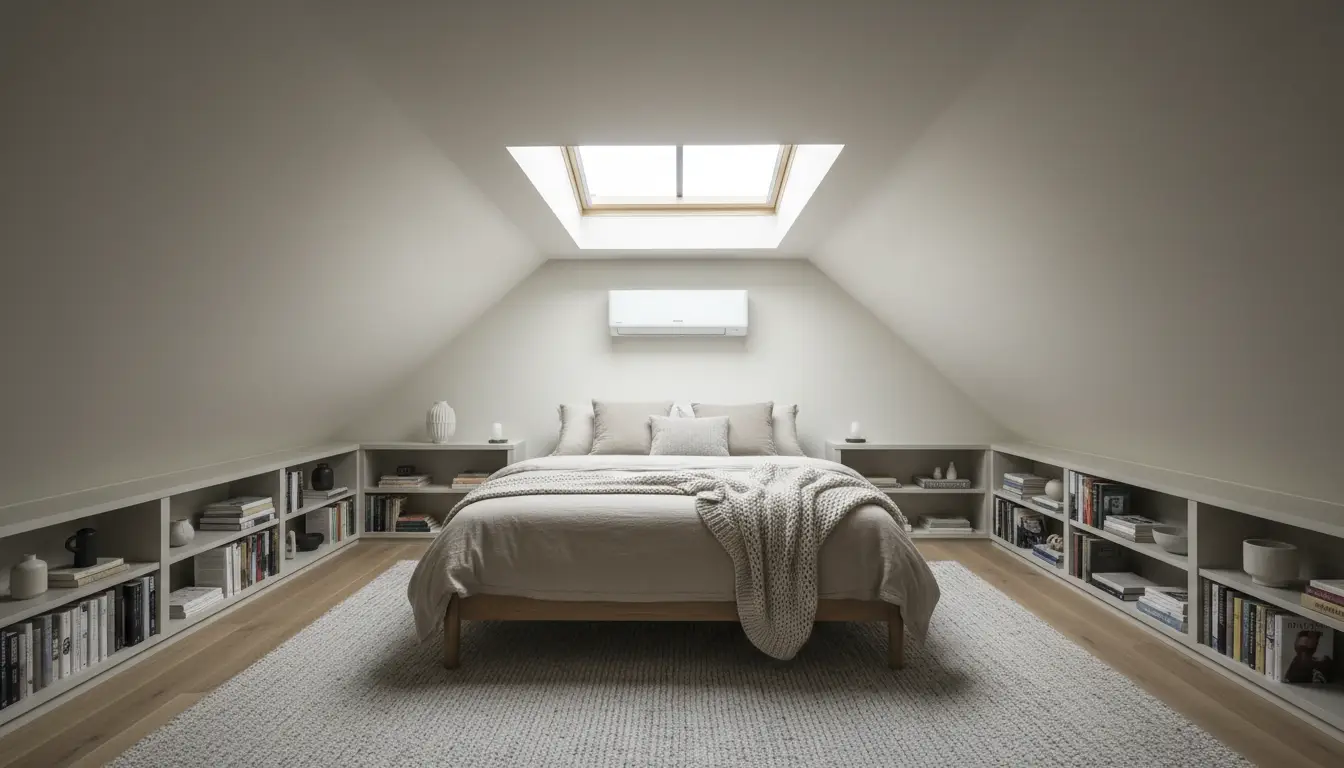
Loft conversions — compact units for sloped ceilings and gable walls, quiet by night.
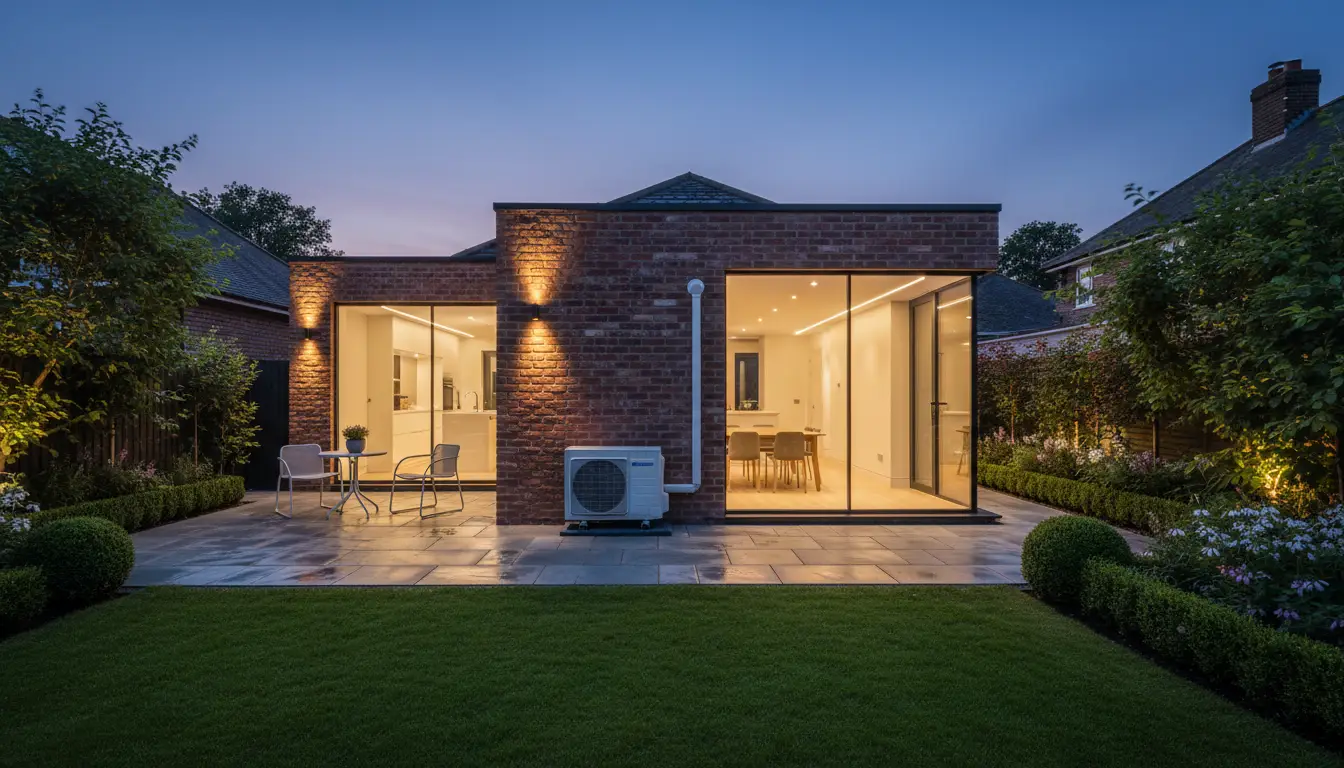
Outside — condensers positioned discreetly, pipework concealed and colour-matched.
Dormers and eaves — every awkward corner considered at the survey, not on the day.